
EMATOLOGIA
ITP — Giugno 2025
- IANALUMAB'S DUAL MECHANISM OF ACTION: TARGETING B CELLS THROUGH ENHANCED B-CELL DEPLETION AND BLOCKADE OF B CELL-ACTIVATING FACTOR RECEPTOR SIGNALING
- A PHASE 2 STUDY OF IANALUMAB IN PATIENTS WITH PRIMARY IMMUNE THROMBOCYTOPENIA PREVIOUSLY TREATED WITH AT LEAST TWO LINES OF THERAPY (VAYHIT3)
- RETROSPECTIVE REVIEW OF COMPLIANCE WITH INTERNATIONAL GUIDELINES FOR IMMUNE THROMBOCYTOPENIA (ITP): STRATEGIES FOR IMPROVING DIAGNOSTIC AND THERAPEUTIC APPROACHES
- FACTORS INFLUENCING THE CHOICE OF ROMIPLOSTIM OR ELTROMBOPAG IN IMMUNE THROMBOCYTOPENIA: INSIGHTS FROM A REAL-WORLD EUROPEAN COHORT
- CHANGES IN DIAGNOSTIC APPROACHES AND TPO-RA UTILIZATION BEFORE AND AFTER 2010: INSIGHTS FROM A MULTICENTER EUROPEAN COHORT

IANALUMAB' S DUAL MECHANISM OF ACTION: TARGETING B CELLS THROUGH ENHANCED B-CELL DEPLETION AND BLOCKADE OF B CELL-ACTIVATING FACTOR RECEPTOR SIGNALING
B cells are key players in the pathogenesis of immune thrombocytopenia (ITP), autoimmune hemolytic anemia (AIHA), and other systemic autoimmune diseases, supporting B-cell depletion as an attractive therapeutic strategy in these patients. However, cell survival signals mediated by high level of soluble B cell-activating factor (BAFF) may interfere with B-cell depletion and drive disease activity. Ianalumab, an investigational glycoengineered (afucosylated) monoclonal antibody targeting BAFF-receptor (BAFF-R), has been shown to deplete B cells through enhanced antibody-dependent cellular cytotoxicity (ADCC) with concurrent blockade of BAFF:BAFF-R-mediated signals.1
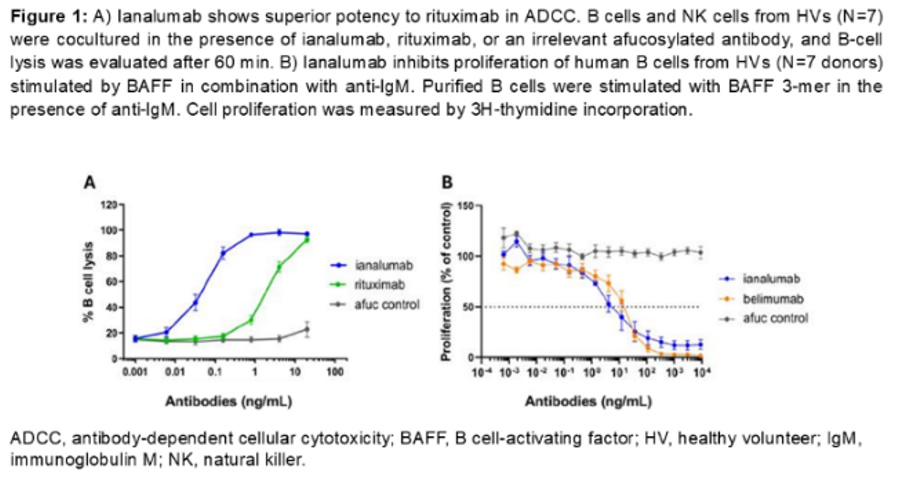
The aim of this study is to extensively characterize the properties of ianalumab on B cells in vitro, as well as its ability to deplete circulating and tissue B cells in B6 mice and in an established active mouse model of ITP.2 The binding affinity and specificity of ianalumab were evaluated using Biacore and flow cytometry. In vitro B-cell killing was assessed using peripheral blood mononuclear cells or isolated NK cells and B cells from healthy volunteers (HVs). In vitro blockade of BAFF-R stimulation was evaluated through competition assays with labeled BAFF, Western blots of NF-kB2 intact and cleaved forms, B-cell proliferation measured by thymidine incorporation, and quantification of IgG secretion. The efficacy of B-cell depletion following administration of ianalumab in B6 mice and the effects on mortality, thrombocytopenia, and anti-platelet antibodies in an active mouse model of ITP were investigated. Ianalumab demonstrated high affinity and selectivity for BAFF-R. In an ADCC assay coculturing purified NK cells with B cells from HVs, ianalumab showed a 44-fold increased potency on B-cell lysis compared to rituximab (Fig. 1). Additionally, ianalumab effectively prevented BAFF from binding to BAFF-R-expressing cells. This blockade of BAFF-R on human B cells correlated with effective inhibition of BAFF-induced cleavage of NF-κB2 (p100), proliferation and IgG production.
Notably, ianalumab was able to inhibit B-cell proliferation with the same potency, when induced by BAFF. In vivo, SCID mice with ITP treated with ianalumab had significantly reduced blood B-cell counts, and a trend toward reduced ITP-related mortality. Additionally, ianalumab treatment resulted in a reduction in anti-platelet antibody levels compared with the ITP control group at the peak of ITP-related mortality. Compared with the ITP control, ianalumab treatment resulted in higher platelet counts with an earlier time to recovery (platelet counts >150k/µL) and improved scores of disease severity. Ianalumab, through its dual mechanism of action, provides more potent B-cell depletion than rituximab and additional BAFF-R blockade on remaining B cells in vitro and demonstrates reduced disease activity in a murine ITP model. Data from an interim analysis of the first 10 patients enrolled in a Phase 2 study of ianalumab in patients with primary ITP previously treated with at least 2 lines of therapy (NCT05885555) have provided preliminary efficacy (at 25 weeks) and safety information.3 Phase 3 studies are ongoing to investigate the efficacy and safety of ianalumab in 1L and 2L primary ITP (NCT05653349 and NCT05653219, respectively) as well as warm autoimmune hemolytic anemia (NCT05648968).
References:
1. McWilliams EM et al. Blood Adv. 2019;3:447-60.
2. Chow L et al. Blood. 2010;115:1247-53.
3. Kuter DJ et al. Blood. 2024;144(Suppl1):710.
A PHASE 2 STUDY OF IANALUMAB IN PATIENTS WITH PRIMARY IMMUNE THROMBOCYTOPENIA PREVIOUSLY TREATED WITH AT LEAST TWO LINES OF THERAPY (VAYHIT3)
Blockade of the B-cell activating factor receptor (BAFF-R) signaling pathway as well as depletion of BAFF-R-expressing B cells may provide clinical benefit to patients (pts) with immune thrombocytopenia (ITP). Ianalumab is a glycoengineered fully human monoclonal antibody that targets the BAFF-R, blocks its essential functions such as B-cell activation, proliferation and survival, and induces B-cell depletion via antibody-dependent cellular cytotoxicity. Ianalumab has shown efficacy and safety in different autoimmune diseases and is being investigated for primary ITP. The VAYHIT3 study (NCT05885555) assesses the safety and efficacy of ianalumab in pts with primary ITP who failed ≥2 prior treatment lines.
This Phase 2, open-label, single-arm study enrolled adults with primary ITP and a platelet (PLT) count <30 G/L, previously treated with at least a corticosteroid (CS) and a thrombopoietin receptor agonist (TPO-RA). Pts who had prior splenectomy were excluded. Pts received 4 doses of ianalumab, 9 mg/kg intravenously, one every 4 weeks; concomitant therapy with CS and/or TPO-RA could be continued if clinically indicated and if the dose was stable ≥14 days before ianalumab initiation. The primary endpoint is confirmed response (ConfR), defined as PLT count ≥50 G/L at ≥2 consecutive assessments ≥7 days apart between Weeks 1-25, without rescue for ≥4 weeks or start of new ITP treatment before reaching ConfR. Secondary objectives were quality of response and safety. Interim safety data were analyzed for all 39 pts enrolled at data cutoff (Jun 2024), while interim efficacy data were analyzed for the first 10 pts who completed Week 25 or discontinued earlier. Recruitment is now completed (N=41 pts) and the primary analysis will be conducted once all pts reach Week 25 or discontinue earlier.
At data cutoff, 8 pts (21%) had completed Week 25, 2 pts discontinued treatment early (pt decision; 1 remained in safety follow-up and 1 discontinued the study) and 29 pts were receiving treatment but had not yet reached Week 25. Median (range) age was 55 (18-80) years, and 54% were female. Median time from initial ITP diagnosis was 57 months. Pts were heavily pretreated, with a median number of 6 prior treatment lines; all pts received prior CS and TPO-RAs, 46% prior rituximab, and 54% other immunosuppressants.
Five (50%) out of the 10 pts included in the interim efficacy analysis achieved ConfR. Four of them were on a TPO-RA and 1 on ianalumab only, with a median time to ConfR among the 5 responders of 1.2 months (95% CI: 0.3, not estimable). The median best post-baseline PLT count among all 10 pts was 129.0 G/L (range: 3-709 G/L; Figure).
Most of the 39 pts experienced at least one adverse event (AE, 82%) and 26% experienced a grade ≥3 AE. Six pts (15%) experienced serious AEs. Thirteen pts (33%) reported infections, and 5 (13%) had infusion-related reactions (all grade 1 or 2 except one in each category). No treatment discontinuations due to AEs occurred (Table). One death was reported after Week 25 due to pulmonary edema, which was assessed as unrelated to ianalumab. No unexpected safety signal was detected up to data cutoff.
The interim analysis results are the first data on pts with primary ITP treated with ianalumab, providing preliminary efficacy and safety data over a short treatment course. The primary analysis results from all 41 pts with longer follow-up (data cutoff Feb 2025) will be presented at EHA 2025.

RETROSPECTIVE REVIEW OF COMPLIANCE WITH INTERNATIONAL GUIDELINES FOR IMMUNE THROMBOCYTOPENIA (ITP): STRATEGIES FOR IMPROVING DIAGNOSTIC AND THERAPEUTIC APPROACHES
Immune thrombocytopenia (ITP) is an autoimmune disorder causing low platelet counts due to increased destruction and impaired production. Despite international guidelines, adherence varies, affecting outcomes. This study evaluates compliance, identifies care gaps, and suggests strategies to optimize ITP management.
This retrospective review assessed adherence to international consensus guidelines for the management of immune thrombocytopenia (ITP). The primary goals were:
- To evaluate compliance with diagnostic and treatment protocols
- To identify gaps in care pathways (such as outpatient care, prescriptions, and perioperative/pregnancy protocols)
- To propose evidence-based interventions aimed at optimizing patient outcomes during high-risk periods.
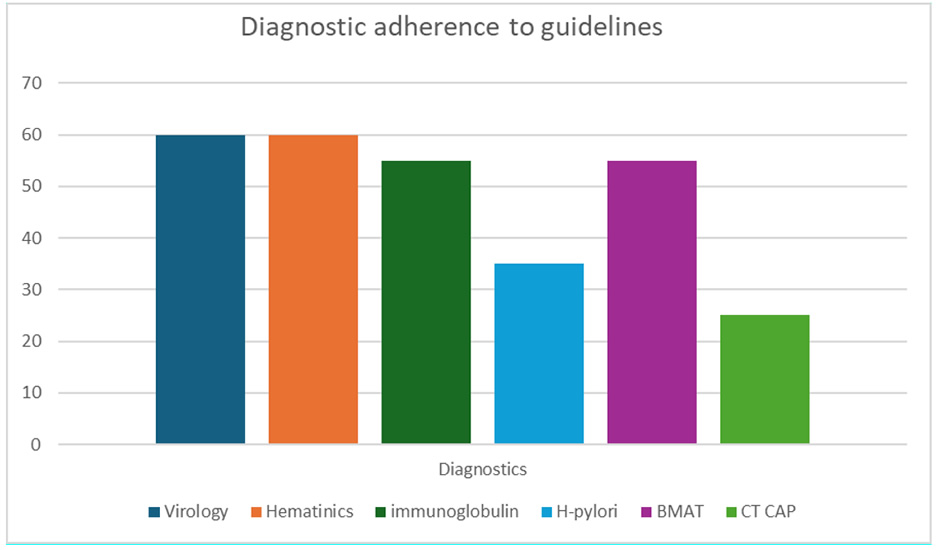
Clinical data from 20 ITP patients, including those with multiple relapses, treated over a 10-year period, were collected and analysed. Patient pathways were mapped to assess adherence to guidelines across diagnostics, therapies (from first- to fifth-line treatments), bone marrow assessments, multidisciplinary team (MDT) involvement, and perioperative/pregnancy management. Compliance was suboptimal for virology (60%) and haematinic screening (60%). Immunoglobulin profiling (55%), Helicobacter pylori screening (35%), and bone marrow (BM) examinations (55%) were underused. CT scans of the chest, abdomen, and pelvis were performed in 55% of patients, with 30% lacking clear indications for malignancy or lymphoma suspicion (only 25% indicated).
These were the Treatment Pathways:
- Immediate Treatment: 40% of patients received intravenous immunoglobulin for bleeding.
- First-line: 95% (19/20) received steroids (75% prednisolone, 20% dexamethasone). No significant outcome difference was noted between the types of steroids.
- Second-line: 95% required thrombopoietin receptor agonists (TPO-RA).
- Third to Fifth-line: 55% (11/20) required immunosuppressants or SYK inhibitors, while 10% (2/20) needed fifth-line therapy.
- Relapse: Patients who were poor responders to first-line therapy relapsed in less than 3 months, compared to those with complete responses who relapsed after more than a year
Issues included delays in outpatient prescriptions (15%), inadequate MDT involvement (36%, despite 55% requiring at least two lines of therapy), and inconsistent perioperative planning (25%). However, 100% of pregnant patients had a documented obstetric plan.
These are the authors' key recommendations:
- Standardize Diagnostics: Mandate immunoglobulin profiling, H. pylori screening, and limit CT scans to suspected malignancy/lymphoma. Restrict bone marrow exams to atypical or refractory cases.
- Optimize Therapy: No added benefit of dexamethasone over prednisolone for first-line treatment. Favor TPO-RA over rituximab/splenectomy for second-line therapy.
- Enhance MDT Collaboration: Require regional MDT review for patients needing ≥2 treatment lines.
- Operational Improvements:
- Develop ITP-specific clinic templates, define consultant/nurse roles, and implement prescription tracking.
- Establish trust-wide protocols for perioperative and pregnancy management.
This audit highlights key gaps in guideline adherence, particularly in diagnostics, MDT engagement, and care coordination. Implementing structured care pathways, improving MDT collaboration, and introducing dedicated ITP clinic templates could reduce treatment delays, limit unnecessary tests, and enhance outcomes for refractory patients.
FACTORS INFLUENCING THE CHOICE OF ROMIPLOSTIM OR ELTROMBOPAG IN IMMUNE THROMBOCYTOPENIA: INSIGHTS FROM A REAL-WORLD EUROPEAN COHORT
Thrombopoietin receptor agonists (TPO-RA) are essential treatment options for primary immune thrombocytopenia (ITP). However, the factors guiding TPO-RA selection and their impact on hospitalization remain inadequately defined.
This study aimed to identify the clinical factors influencing TPO-RA selection in ITP patients and assess the impact of treatment initiation on hospitalization rates, highlighting the role of disease severity in guiding therapeutic decisions.
This real-world study included 267 patients diagnosed with ITP from 16 centers across six European countries (Italy: 66, Spain: 59, France: 58, Switzerland: 40, UK: 30, Norway: 14). Between January 2014 and December 2018, patients initiated either romiplostim (n = 84) or eltrombopag (n = 183). Factors associated with TPO-RA selection—including patient characteristics, platelet counts, bleeding severity, and hospitalization requirements—were analyzed.
The primary indication for TPO-RA initiation was refractoriness or loss of response to previous therapy (40.4%). Romiplostim was predominantly prescribed based on physician preference (59.5%), while eltrombopag was often chosen due to patient preference (59.6%). The median initial doses were 350 mg/week (range: 25-525 mg/week) for eltrombopag and 2.9 μg/kg/week (range: 1-7 μg/kg/week) for romiplostim. The median duration of first TPO-RA treatment was 13 months (range: 0-121 months), with romiplostim at 8.5 months and eltrombopag at 16 months.
No significant associations were found between TPO-RA selection and patient age, sex, comorbidities (liver disease, diabetes, hypertension), disease phase, history of malignancy or thrombosis, or response to previous therapies (P > 0.05). However, patients treated with romiplostim had higher bleeding severity at both diagnosis and treatment initiation. At diagnosis, bleeding was more frequent in patients later prescribed romiplostim (p = 0.007), with a median cumulative ITP bleeding scale (IBLS) score of 2 compared to 0 in eltrombopag-treated patients (p = 0.003). Median platelet counts at diagnosis were also lower in the romiplostim group (18 × 10⁹/L vs. 25 × 10⁹/L, p = 0.014). At TPO-RA initiation, both the number of hemorrhagic sites and bleeding severity were significantly higher in patients allocated to romiplostim (p < 0.05).
Before TPO-RA initiation, the burden of hospital care, including emergency visits and hospital admissions, was substantial, with an average of 1.11 events per patient per year. Six months after starting TPO-RA therapy, total unscheduled hospital visits decreased by 52.7%, from 148 in the six months before treatment to 70 after treatment (p = 0.000002). The number of hospitalized patients also declined from 104 to 53 over the same period. Although no statistically significant correlation was observed between pre-treatment hospitalization frequency and TPO-RA selection, there was a trend toward prescribing romiplostim for patients who had required hospital visits due to bleeding in the preceding six months (27.4% vs. 19.1%, p = 0.129).
These findings suggest that romiplostim was more frequently prescribed in patients with more severe bleeding and lower platelet counts at diagnosis. The substantial reduction in hospital visits following TPO-RA initiation highlights its role in mitigating disease burden. Results suggest that clinical severity at diagnosis, rather than during follow-up, was a key determinant in treatment choice.
CHANGES IN DIAGNOSTIC APPROACHES AND TPO-RA UTILIZATION BEFORE AND AFTER 2010: INSIGHTS FROM A MULTICENTER EUROPEAN COHORT
The management of immune thrombocytopenia (ITP) has evolved significantly over the past two decades since the introduction of the thrombopoietin receptor agonists (TPO-RA).
This study aimed to evaluate shifts in diagnostic approaches and therapeutic strategies in ITP management before and after 2010, with a particular focus on TPO-RA utilization trends, deviations from guideline-recommended practices, and the evolving role of second-line therapies.
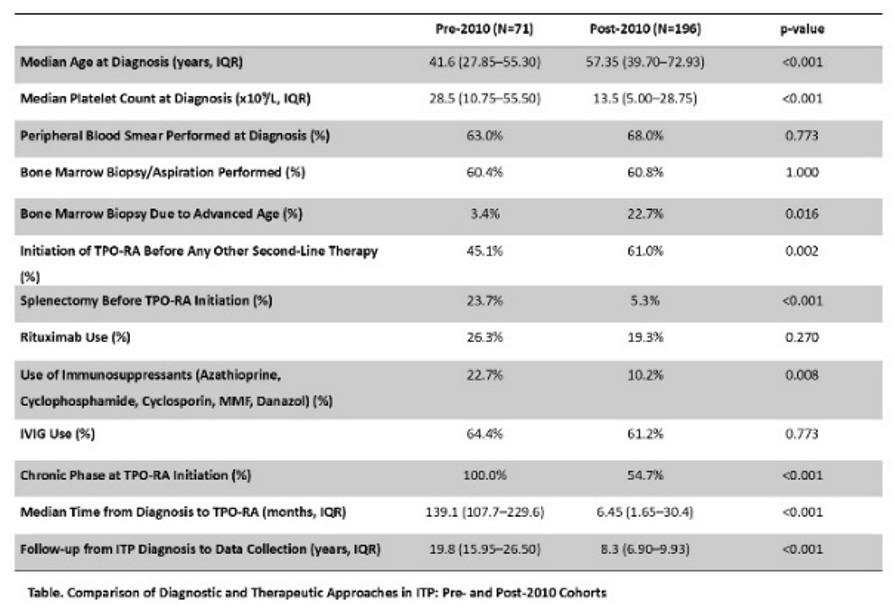
This multicenter retrospective study included 267 patients diagnosed with ITP before (n = 71) or after (n = 196) 2010 that had initiated TPO-RA between 2014 and 2018. Patients were stratified based on the year of diagnosis to assess differences in diagnostic evaluations and therapeutic strategies following the introduction of TPO-RA. Data were collected between November 2022 and May 2024. Patients diagnosed before 2010 had a median follow-up of 19.8 years (IQR: 15.95-26.50 years), whereas those diagnosed after 2010 had a median follow-up of 8.3 years (IQR: 6.9-9.93 years). Notably, all patients diagnosed before 2010 received TPO-RA in the chronic phase, whereas only 36.6% of post-2010 patients followed this pattern (p < 0.001). Furthermore, 63.4% of patients diagnosed after 2010 initiated TPO-RA without prior exposure to another second-line therapy, compared to 40.5% in the pre-2010 cohort (p = 0.002). Regarding diagnostic practices, a peripheral blood smear at diagnosis was performed only in 68.0% of patients in the post-2010 period and 63.0% in the pre-2010 group (p = 0.773). Bone marrow biopsy or aspiration remained common, performed in 60.8% of post-2010 cases and 60.4% of pre-2010 cases. The primary indication for bone marrow evaluation in the post-2010 group was advanced age, accounting for 22.7% of cases, a significant increase compared to 3.4% in the pre-2010 cohort (p = 0.016).
Changes in second-line therapy use were also observed. Splenectomy was performed in 23.7% of pre-2010 patients before TPO-RA initiation, compared to only 5.3% in the post-2010 group (p < 0.001). Rituximab use declined from 26.3% in the pre-2010 period to 19.3% in the post-2010 group (p = 0.270). The use of immunosuppressants and danazol significantly decreased from 22.7% before 2010 to 10.2% in the post-2010 period (p = 0.008). The widespread use of intravenous immunoglobulin (IVIG) persisted in both cohorts, with 64.4% in the pre-2010 group and 61.2% in the post-2010 group. During treatment with first TPO-RA, regular peripheral blood smear monitoring was lacking in 74.2% of cases. Among those who underwent this test, it was performed at intervals of three months or more in 77.9% of cases. Platelet count monitoring during TPO-RA therapy was conducted every three months or longer in 49.1% of patients. Notably, in 85.7% of non-responders, no bone marrow assessment was conducted before initiating an alternative therapy.
The variability in diagnostic practices, such as limited use of peripheral blood smears and excessive bone marrow evaluations, highlights the importance of standardized monitoring protocols. The decreased reliance on splenectomy and immunosuppressants aligns with evolving treatment approaches, while the continued high use of IVIG suggests potential for optimizing treatment strategies. These findings reflect the ongoing evolution of ITP management in the era of TPO-RA.