

TISAGENLECLEUCEL IN PEDIATRIC AND YOUNG ADULT PATIENTS WITH HIGH-RISK B-CELL ACUTE LYMPHOBLASTIC LEUKEMIA AND MINIMAL RESIDUAL DISEASE AT THE END OF FRONTLINE CONSOLIDATION
In patients with B-cell acute lymphoblastic leukemia (B-ALL), persistent minimal residual disease (MRD) is associated with a high risk of relapse. In the Children’s Oncology Group (COG) AALL0232 frontline trial, children and young adults with high-risk B-ALL and MRD ≥0.01% at the end of frontline consolidation (EOC) had a 5-year disease-free survival (DFS) of only 39% (Borowitz, Blood, 2015).
The aim of this phase 2 trial, conducted by Shannon Maude et al.in collaboration with the COG, was to evaluate the efficacy and safety of tisagenlecleucel, a CD19-directed chimeric antigen receptor (CAR) T cell therapy, in this very high-risk population.
CASSIOPEIA/COGAALL1721 (NCT03876769) is a global (34 US/Canada sites, 10 EU/UK sites) phase 2 study of tisagenlecleucel in patients (1-25 years old) with National Cancer Institute high-risk B-ALL and persistent MRD ≥0.01% by flow cytometry at EOC. Patients received standard lymphodepleting chemotherapy followed by a single tisagenlecleucel dose (0.2-5×10⁶ CAR+ T cells/kg for patients ≤50 kg or 0.1-2.5×10⁸ CAR+ T cells for patients >50 kg). Patients with B-cell recovery within 6 months and/or MRD ≥0.01% at any time could receive a reinfusion. Primary endpoints were 4-year overall survival (OS) and 5-year DFS, defined as time from first infusion to morphologic relapse, secondary malignancy, or death, without censoring for new anticancer therapy, including stem cell transplant (SCT). Secondary endpoints included DFS with censoring, MRD negative rate (MRD <0.01%) at 3 months, and safety.
The primary analysis included 121 infused patients; 1 patient was not infused due to an adverse event. Median age was 14 years (range: 1-24 years), 67% were male, 6% had trisomy 21. At data cut-off (August 20, 2025), median time from infusion to last follow-up was 38 months. Four-year OS was 85% (95% CI: 76-90%). DFS (95% CI) without censoring for new therapy was 71% (61-79%) at 3 years and 64% (53-73%) at 5 years. DFS (95% CI) with censoring was 69% (55-79%) at 3 years and 62% (46-74%) at 5 years. MRD negative rate post infusion was 95% at day 29 and 86% at 3 months. Relapse occurred in 31 patients, among which 7 relapsed after new therapy/SCT. A second infusion was given in 41 (34%) patients; 58 (48%) patients received new anticancer therapy/SCT without prior relapse. Median duration of B-cell aplasia was 5.6 months. Probability (95% CI) of ongoing remission and B-cell aplasia at 3, 6, and 12 months was 76% (67-83%), 47% (38-56%), and 31% (23-41%), respectively. Following first infusion, cytokine release syndrome (CRS) occurred in 37% (grade ≥3, 2%) and immune effector cell–associated neurotoxicity syndrome (ICANS) in 3% (grade ≥3, 1%). All 18 deaths occurred after relapse and/or new therapy/SCT.
In a very high-risk population with persistent MRD in frontline therapy, who historically have low 5-year DFS, tisagenlecleucel produced durable remissions, with very low rates of severe CRS/ICANS. In this study, almost half of the patients received new anticancer therapy, including SCT, without experiencing prior relapse. Longer follow-up is needed to confirm 5-year DFS.
PET-INTEGRATED NOMOGRAMS FOR SURVIVAL PREDICTION IN PATIENTS WITH LARGE B-CELL LYMPHOMA TREATED WITH CAR T-CELL THERAPY
CD19-directed chimeric antigen receptor T-cell (CART) therapy is effective in relapsed/refractory large B-cell lymphoma (R/R LBCL), however clinical outcomes remain heterogeneous. Reliable prognostic stratification prior to CART infusion is therefore crucial to optimise patient selection and management. ^18F-FDG PET/CT is the standard imaging modality for staging and response assessment in LBCL, providing quantitative metabolic parameters that reflect tumour burden and disease biology. When integrated with clinical and laboratory variables, these parameters may improve prognostic modelling.
The aim of the study carried out by Beatrice Casadei et al, is to develop PET-integrated nomograms for predicting progression-free survival (PFS) and overall survival (OS) in R/R LBCL patients (pts) treated with CART.
This post-hoc analysis of a retro-prospective, single-center study included R/R LBCL pts treated with CART in routine clinical practice between August 2019 and November 2023. Baseline variables (n=35) included demographics, histology (DLBCL NOS vs high grade B cell lymphoma [HGBCL]), number and response to prior lines of treatment, bridging therapy (BT, yes or no), laboratory parameters (e.g. lactate dehydrogenase [LDH], C-reactive protein [CRP], hemoglobin [Hb], white blood cell [WBC] and lymphocyte [lym] count), and PET metrics (maximum and mean standardized uptake value, metabolic tumor volume [MTV], total lesion glycolysis [TLG], extranodal/bone involvement). Variable selection used adaptive LASSO with bootstrap stability selection (500 resamples). Multivariable Cox models were developed for PFS and OS. Model performance was assessed using Harrell’s concordance index (C-index), time-dependent area under the curve (AUC), and calibration plots.
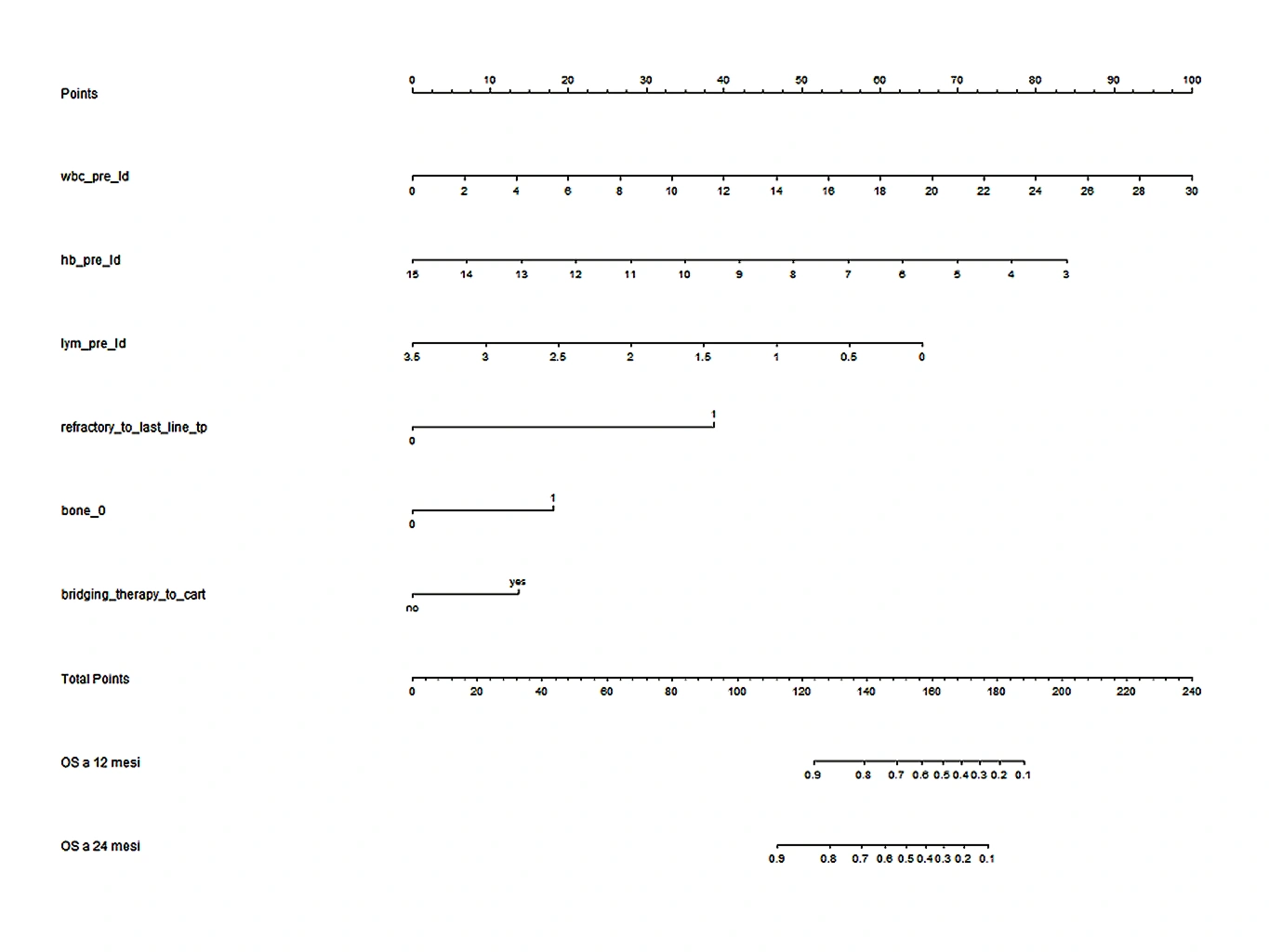
A total of 141 pts were analysed: 111 (78.7%) had DLBCL NOS and 30 HGBCL. Most pts had stage III/IV disease (73%), received a maximum of 2 previous line of treatment (73.7%), and were refractory to the last therapy (93%). BT was performed in 84% pts. CART products included axi-cel (n=109), tisa-cel (n=30), and liso-cel (n=2). With a median follow-up of 16.6 months, the median PFS and OS were 13.3 and 40.2 months, respectively. On univariate analysis, PET-derived parameters (MTV, TLG, bone involvement) and laboratory variables (LDH, CRP, ferritin, Hb, WBC and lym count) were associated with outcomes (p<0.05). In the multivariable OS model (C-index of 0.798, 95%CI 0.731–0.856), four independent predictors emerged: Hb (hazard ratio [HR] 0.72, 95%CI 061-084, p<0.001), WBC (HR 1.17, 95%CI 1.09-1.26, p<0.001) and lym_count (HR 0.41, 95%CI 0.22-0.75, p=0.004) as a protective factors, while bone involvement on PET (HR 2.36, 95%CI 1.28-4.36, p=0.006) as an adverse factor. In the PFS model (C-index 0.689, 95%CI 0.623–0.756), Hb remained protective (HR 0.78, 95%CI 0.68-0.89, p<0.001), while receiving BT (HR 2.53, 95%CI 1.14-5.63, p=0.02) was adverse. Time-dependent ROC showed AUCs at 12 months of 0.86 (OS) and 0.71 (PFS).
We developed PET-integrated nomograms that predict outcomes after CART in R/R LBCL. These models underscore the interplay between host marrow reserve (Hb and lym count) and metabolic tumour distribution, including bone involvement. The proposed tools may support trial design and individualized decision-making and warrant prospective multicentre validation.
INTERNATIONAL EXPERT CONSENSUS ON REAL-WORLD CAR T-CELL ELIGIBILITY IN LARGE B-CELL LYMPHOMAS: AN E-DELPHI STUDY
Despite robust clinical evidence, regulatory approval and guideline recommendations in second- and third-line settings, disparities persist for referring patients with relapsed or refractory diffuse large B-cell lymphoma (r/r DLBCL) for chimeric antigen receptor T-cell therapy (CAR T). Recent studies estimate only one-third of CAR T-eligible patients are ultimately treated, partly due to uncertainty regarding referral eligibility criteria. Consensus-driven guidance is needed to support equitable, timely referral practices.
The aim of the study – led by Catherine Thieblemont et al.- is to identify and characterize consensus on core clinical eligibility criteria to guide referral of patients with r/r DLBCL by community-based physicians to specialized centers for evaluation for CAR T.
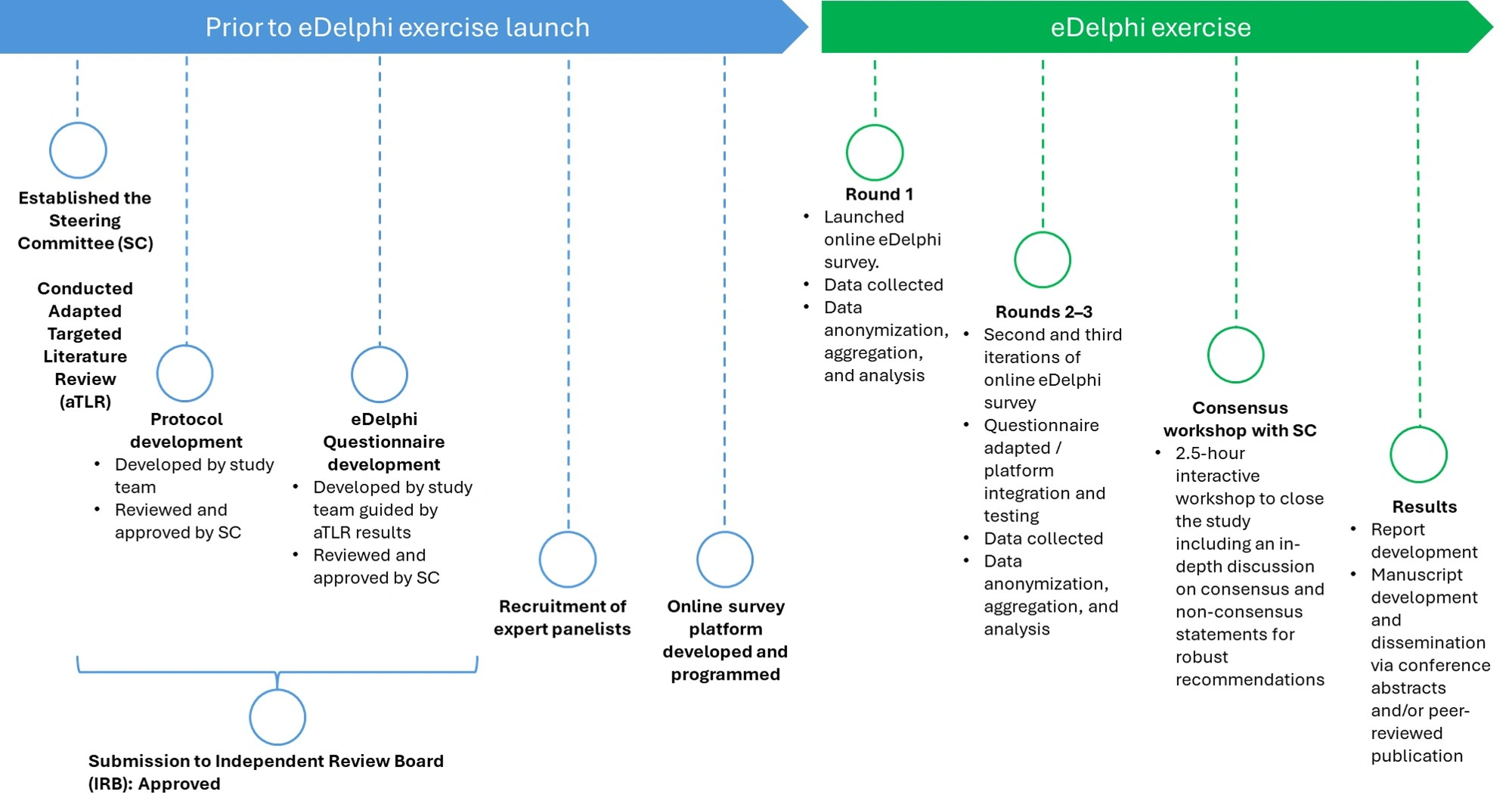
An e-Delphi study was conducted in accordance with established consensus reporting standards. All study materials, designed in alignment with ACCORD (ACcurate COnsensus Reporting Document) guidelines, received approval from an independent steering committee of clinical experts, and independent institutional review boards. A panel of 23 expert hematology and/or oncology clinicians in USA, Canada, UK, France, Germany, and Italy, anonymously responded to statements via a web-based questionnaire (≥75% consensus threshold).
All (100%, N=23) reported academic research leadership, including guideline development (74.0%) and board memberships (61%), managing a mean (SD) of 63.7 (57.3) patients with LBCL and referring/prescribing CAR T to 22.2 (16.9), in the last 12 months.
All agreed that CAR T-eligibility is not the same as autologous stem-cell transplant (ASCT)- eligibility, and ASCT-ineligible patients can be considered CAR T eligible; 95.7% agreed that eligibility for CAR T is broader than ASCT.
Panelists agreed (82.6%) on immediate referral for relapse within 12 months post- or, refractoriness to, first-line treatment. Panelists agreed that response to first-line therapy should be evaluated in all patients after 2-4 cycles using interim PET (82.6%) and that patients with stable disease at these timepoints should be referred (87.0%). All agreed to refer patients with progressive disease after 2-4 cycles, and patients with r/r DLBCL after ≥2 lines of systemic therapy.
All agreed that age should neither be an absolute contraindication for referral nor, alone, be an absolute exclusion criterion. For patients aged ≥70 years, 87.0% agreed a formal frailty/comorbidity assessment should be prioritized over age alone when determining referral eligibility.
Performance status (PS) was identified as a core clinical criterion for referral by 91.3%, with automatic referral for an ECOG PS of 0, 1, or 2.
82.6% agreed that patients with creatinine clearance above 30 mL/min should automatically be referred, and 78.2% that cardiovascular function is a core criterion.
Statements not reaching consensus will be re-presented in subsequent Delphi rounds along with the aggregated and anonymized responses from the previous round.
Round 1 analysis demonstrates robust international expert consensus on referral eligibility for CAR T in patients with r/r DLBCL. The panel strongly endorsed broad eligibility for referral independent of ASCT eligibility, and provided clarity regarding disease status, age, performance, and organ function as core referral criteria. These consensus recommendations have the potential to reduce unwarranted variation in referral practices and support more equitable access to CAR T. Final recommendations will be presented at congress.
RADIOTHERAPY AS BRIDGING, SALVAGE OR CONSOLIDATION STRATEGY IN CAR-T–TREATED LYMPHOMA PATIENTS: INSIGHTS FROM THE FRENCH DESCAR-T REGISTRY
Radiotherapy (RT) is frequently used in lymphoma patients (pts) eligible for CAR-T cells, either as holding/bridging therapy before infusion or as salvage/consolidation after infusion. However, large real-world data evaluating its impact on outcomes are limited. The authors analyzed the role of RT in CAR-T–treated pts from the French national DESCAR-T registry.
This study- carried out by Vincent Camus et al.- included B-cell lymphoma pts from DESCAR-T (NCT04328298) who received RT either as (i) holding/bridging therapy before first CAR-T infusion (Population 1, pop1) or (ii) salvage (SRT) or consolidation RT (CRT, RT delivered after CAR-T without evidence of progression) within 6 months (mo) after infusion (Population 2, pop2). Survival endpoints (PFS and OS) were assessed from first CAR-T infusion. Patients were censored at their second infusion. Objective response was analyzed through ORR, CRR and DOR. Safety was evaluated through CAR-T specific toxicity, persisting cytopenias (lasting ≥30 days) and death. Irradiated sites were not collected.
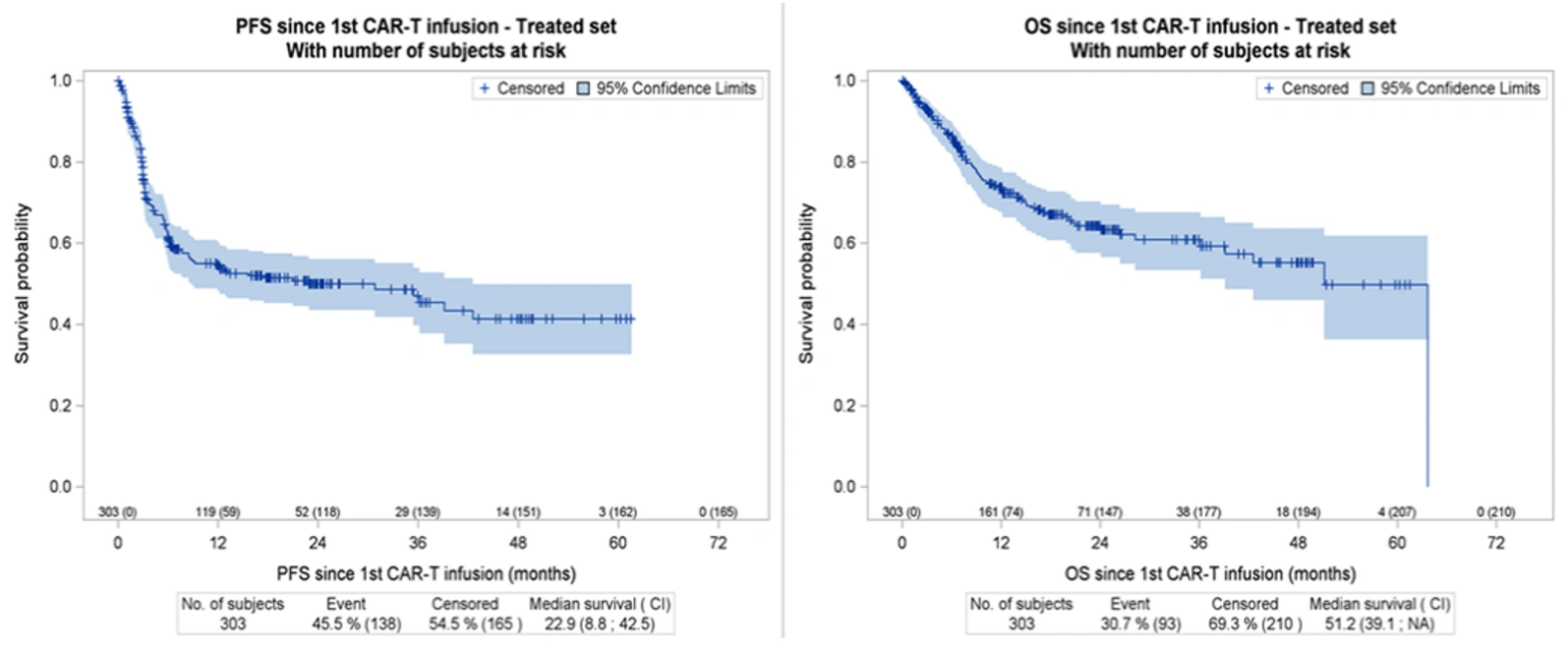
In pop1 (n=303), 183 pts received RT alone (RTa) and 120 RT combined with systemic therapy (RTc). Median age was 64 years (range 19–81). A majority of LBCL (82%) was observed with small proportions of PMBL (6%), FL (5%), and MCL (4%). Advanced stage was reported in 67.8% of pts (RTa 63% vs RTc 76%), and elevated LDH in 58% (RTa 55% vs RTc 64%). Median prior treatment lines before CAR-T was 2 (range 1-8). Best ORR after CAR-T was 86.6% (95% CI 82.2–90.2), including CRR 72.5% (67–77.5). Responses were higher with bridging RTa vs RTc: ORR 90.7% (85.5–94.5) vs 80.2% (71.7–87); CRR 79.1% (72.5–84.8) vs 62.1% (52.6–70.9). Median follow-up since CAR-T infusion was 24.6 mo. Among responders (n=258), 38.8% had a subsequent event (progression/death). Median DOR was 41.8 mo (29.9–NA), with 12- and 24-month DOR rates of 61.4% (54.7–67.4) and 57.7% (50.6–64.1), respectively. In pop1, 93 deaths (31%) occurred after first infusion; 75% were due to progression. Median PFS and OS were 22.9 mo (8.8–42.5) and 51.2 mo (CI 39.1–NA), respectively (Figure 1). CAR-T toxicities were consistent with expected profiles: CRS occurred in 82.5% vs 83.2% (grade ≥3: 4.4% vs 1.7%) and ICANS in 41% vs 45.4% (grade ≥3: 11.4% vs 12.6%) for RTa vs RTc. Prolonged cytopenias persisted at month 3 (16.5% vs 13.3%) and month 6 (7.1% vs 13%).
In pop2 (n=113), 91 pts received SRT and 22 CRT. Median age was 58 years (range 18–78). A majority of LBCL was observed (86%), with small proportions of PMBL (9%), FL (4%), and MCL (1%). Advanced stage and elevated LDH were reported in 79.6% and 73.9% of pts. Median prior treatment lines before CAR-T was 2 (range 1–6). Median follow-up since CAR-T infusion was 26.8 mo. ORR after RT was not collected. Overall, 49 deaths (43.4%) occurred; 88% were due to progression. Median PFS was 2.1 mo (1.9–2.8) with SRT vs 14.3 mo (4.4–NA) with CRT. Median OS was 15 mo (11.2–37.2) with SRT and was not reached with CRT.
In this large national real-world cohort, RT delivered as holding/bridging before CAR-T was associated with high response rates and durable remissions, including in pts with advanced-stage disease. Post-CAR-T RT demonstrated limited efficacy in the salvage setting but encouraging disease control when used as consolidation. No excess CAR-T–related toxicity was observed in pts exposed to RT. These findings support the strategic integration of RT in peri–CAR-T management and warrant prospective evaluation.
NUTRITIONAL PARAMETERS AS PROGNOSTIC MARKERS IN OLDER PATIENTS WITH DIFFUSE LARGE B-CELL LYMPHOMA: A POST-HOC ANALYSIS OF THE ELDERLY PROJECT BY FONDAZIONE ITALIANA LINFOMI
Diffuse Large B Cell Lymphoma (DLBCL) is the most common lymphoma in the elderly, with variable response to immunochemotherapy. Several prognostic systems have been developed to guide treatment. In this setting, comprehensive geriatric assessment (CGA) enables risk stratification and correlates with outcomes, with nutritional status representing a key evaluated component. Albumin, Body Mass index (BMI) and Geriatric Nutritional Risk Index (GNRI) are indices that reflect nutritional status and have been variably employed across different disease settings to explore their prognostic significance. To date, few studies have investigated the prognostic potential of these parameters in the elderly population undergoing treatment for DLBCL.
The aim of the study- carried out by Salvatrice Mancuso et al.- is to evaluate the predictive value of albumin, BMI and GNRI on outcomes of patients aged > 65 years undergoing first-line therapy for DLBCL.
This is an ancillary analysis of Elderly Project of the Fondazione Italiana Linfomi, a prospective multicenter observational study aimed at validating a simplified geriatric assessment tool and a new prognostic score, the EPI. In this study, we selected patients whose complete anthropometric and laboratory parameters were available at baseline.The primary endpoint was the correlation between serum albumin levels, BMI and GNRI and overall survival
Based on the inclusion criteria, 688 out of total of 1207 patients (59%) were deemed eligible, with median age of 75 years.In univariate analysis, albumin showed statistical correlation with 3-yr OS (HR, 0.43; 95% CI, 0.34-0.55; P<0.001). In addition, patients with serum albumin concentration<3.5 g/dl presented 3-yr OS of 56% vs 73% of subjects with values >3,5 gr/dl (P<0.001). In a multivariate Cox proportional hazard regression, we observed a HR of 0.58 (95% CI, 0.44-0.75, P<0.001). As regards BMI, it correlates with 3-yr OS (p-value: 0.003, HR: 0.95, 0.91-0.96 CI). With a cut-off value of 25, patients with BMI < 25 showed worst survival compared with BMI ≥25 (p 0.025). In a multivariate Cox regression analysis, BMI was an independent prognostic factor with an HR of 0.96 (95% CI, 0.92-0.99; P= 0.002). The authors have identified four groups of patients stratified according to GNRI values in relationship to risk of death: none risk (GNRI >98), low risk (GNRI 92-98), moderate (GNRI 82-92), high risk (GNRI <82). Regarding GNRI as continuous variable, there was a significant correlation with 3-yr OS (P<0.001, HR 0.65, 95% CI 0.58-0.74). A correlation was also observed between different GNRI patients groups and 3-yr OS (Tab.1). Finally, high statistical association of albumin, BMI and GNRI with EPI was observed.

In the current therapeutic landscape, treatment personalization requires accurate risk stratification. In elderly patients with DLBCL undergoing antineoplastic treatment, albumin, BMI and GNRI represent independent prognostic parameters for survival, which are simple and easily applicable